

Gamification in Museums: How Games Turn a Visit into an Unforgettable Experience
What is gamification, and why is it used in museums?
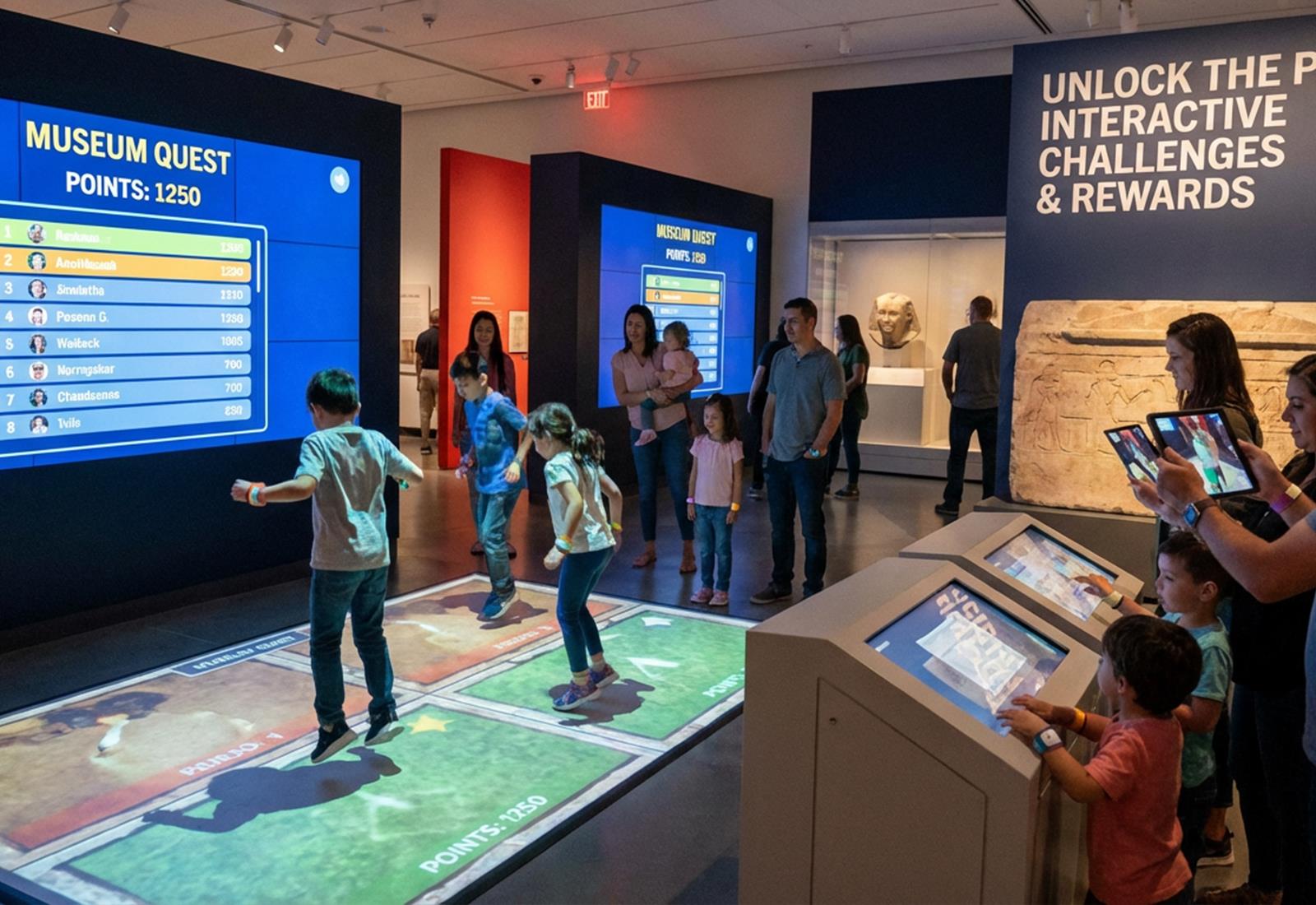
Gamification means applying game elements—such as points, tasks, rewards, and competition—in a context that isn’t normally a game, in this case within museum exhibitions. The goal isn’t just to entertain, but to encourage deeper visitor engagement, spark curiosity, and help people learn through play. Museums have recognized that for modern audiences—especially younger generations—classic exhibitions are often not enough, so they increasingly turn to interactive, entertaining approaches.
Real-world examples
One well-known example is a “treasure hunt” game introduced in the official mobile app. Visitors receive a list of artworks they need to find, and once they locate them and scan a QR code, they unlock interesting facts about the piece and earn points. At the end of the tour, users receive a digital badge—“Louvre Explorer”—and can share their score on social media. Mechanisms like these add motivation to move through the museum and explore actively.
The British Museum uses a similar concept, including quizzes linked to specific galleries. For example, in the mummy gallery the app might ask: “Find the sarcophagus showing the god Anubis.” The visitor must physically explore the space to find the answer. These games often bring families together into teams, turning the visit into a shared adventure rather than passive sightseeing.
The technical side of gamification
Technically, museum gamification relies on mobile apps and indoor positioning technologies. Museums often use QR codes, NFC tags, or Bluetooth beacons placed near exhibits. When a visitor approaches a specific object, the app detects it and launches a challenge or asks a question. Once the user completes the task, they earn points, unlock additional content, or receive virtual rewards.
Some museums go even further by using augmented reality (AR). In projects like “Museum Secrets”, players use their phone camera to see virtual clues on the walls—hidden to the naked eye—and follow them to solve the mystery of a stolen exhibit. AR challenges like these turn the museum into a true interactive playground.
Examples from Croatia
In Croatia, there are a number of interesting initiatives. One illustrative example is the (hypothetical) Museum of the City of Zagreb app, “Zagreb Adventure,” designed for children. Through a series of riddles—such as “Find the portrait of Ban Jelačić and learn his horse’s name for 5 points”—children move from gallery to gallery, solve mini-games, and ultimately earn a digital certificate as a “Young Curator.” This approach motivates them to pay attention to details and develop interest in the content.
Curator–developer collaboration
Successful gamification requires close collaboration between curators, who know how to interpret collections, and developers, who can build technically sound solutions. Games need to be thematically relevant and educational—not just entertaining. Technical reliability is also crucial: apps must run smoothly, have an intuitive interface, and deliver a seamless user experience. A backend system often tracks user profiles, progress, and points, and is sometimes connected to museum Wi-Fi or the internet to enable multiplayer modes and online leaderboards.
Escape rooms in museums
One popular trend is escape room games inside museums. Visitors work through a series of challenges—finding key information on exhibits, solving logic puzzles, or connecting historical facts—to unlock the next stage of the game. This creates an exciting mix of learning and competition that appeals to audiences of all ages.
How do games turn a visit into an adventure?
Gamification has been shown to increase audience engagement—visitors stay longer, explore more, and actively search for information instead of reading it passively. This leads to stronger educational impact through play. Beyond that, these approaches create deeper emotional connections with audiences and help make a museum visit truly unforgettable. In the digital age, games aren’t just entertainment—they’re a powerful tool for education, connection, and inspiration.