

TeamLab Borderless in Tokyo / When Technology and Art Create a World Without Borders
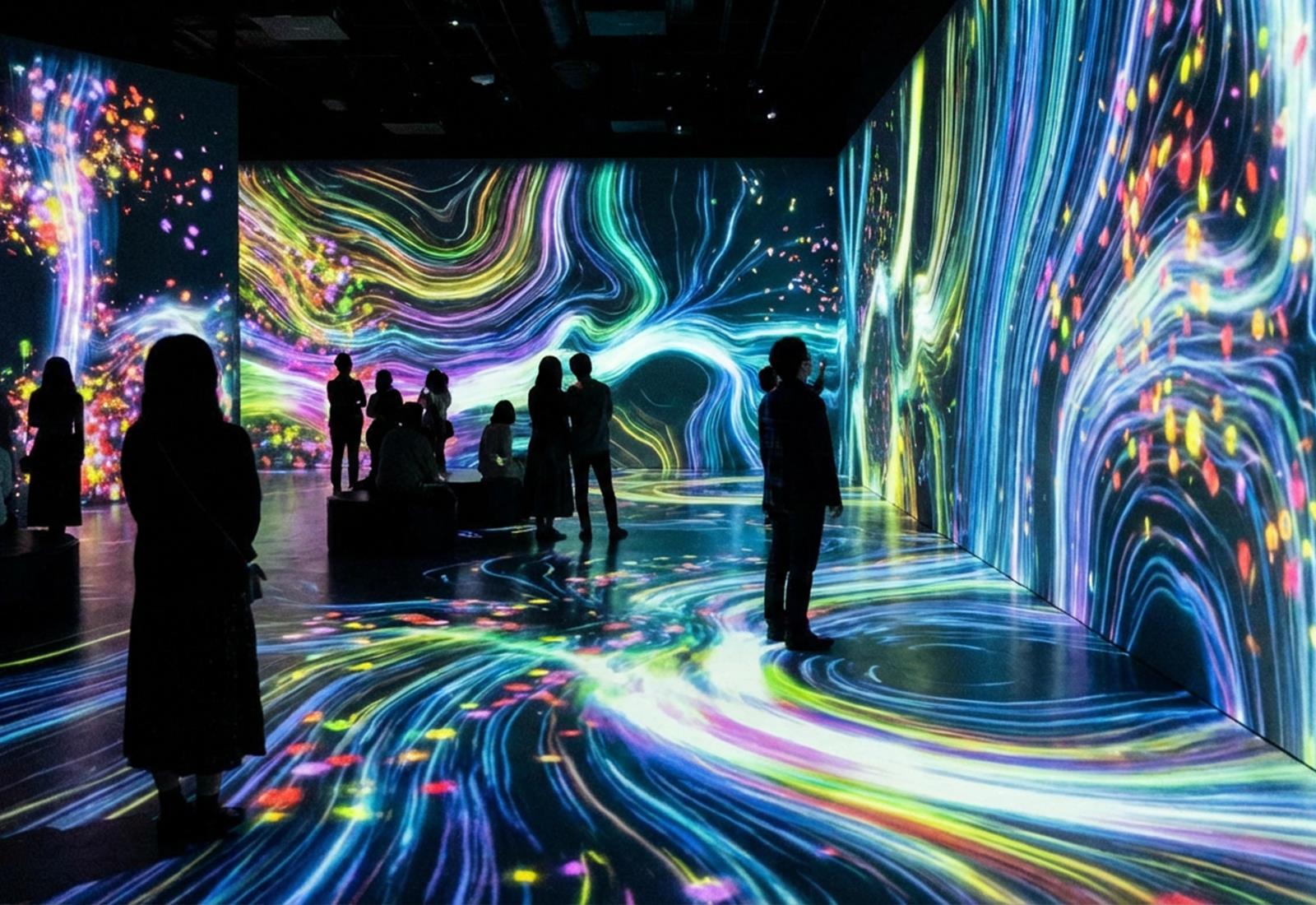
Tokyo is home to one of the most fascinating contemporary art museums in the world — teamLab Borderless, a digital museum that breaks down the boundaries between technology, art, and its audience.
This isn’t a traditional museum with paintings on walls or sculptures behind glass. Instead, visitors step into a world of fully digital, interactive installations that respond to their presence. Light projections, moving imagery, and sound effects transform every corner of the museum into an immersive experience. This extraordinary museum attracts more than two million people each year, including visitors from Japan and around the world, and is known for its strong appeal to younger generations, families, and fans of digital culture.
How does the technology work?
Bringing this marvel to life takes around 470 projectors and more than 520 computers, working together to create roughly 60 digital artworks. High-brightness projectors are precisely positioned to cover the walls, floors, and even ceilings, turning them into dynamic, ever-changing canvases. The software running the system isn’t simply pre-recorded video — it’s powered by generative algorithms that calculate and render visuals in real time, constantly adapting as they go. The setup uses advanced motion and proximity sensors that register every step a visitor takes. For example, when someone stands on a floor covered in digital flowers, they bloom beneath their feet; when a person approaches glowing waterfalls, the flow of water splits and shifts to move around them. This level of technical execution demands perfect synchronization between projectors, graphics cards, software modules, and sensors to keep the experience seamless, with no visible lag.
Interactivity and spatial design
What makes teamLab Borderless unique is its non-linear layout. Visitors aren’t confined to a fixed route — instead, they can explore freely, choosing where to go, how long to stay, and which installations to discover. The installations aren’t separated from one another; they’re interconnected. For instance, butterflies you release in one room can “fly” into another and become part of a new scene. Each space offers a different experience, and many installations respond not only to individuals but also to group interaction, creating a sense of shared participation in art. The rooms are designed to encourage play, exploration, and surprise — even returning visitors can discover something new they hadn’t noticed before.
Behind teamLab Borderless is the art-and-technology collective teamLab, which describes itself as “ultra-technologists.” The group brings together experts from many fields — programmers, engineers, designers, animators, mathematicians — to create experiences that blend science, technology, and art. Their philosophy is rooted in the idea that art doesn’t have to be confined by physical boundaries, nor does it need a predefined line between creator and audience. Their installations often use advanced technologies such as motion-capture systems, artificial intelligence, and generative graphics to respond to visitor behavior in real time. In the case of teamLab Borderless, the collective didn’t just create the visuals — it also developed the entire concept of the space, the ticketing system, and the interactive user experience.
The visitor experience
For audiences, visiting teamLab Borderless isn’t a standard museum tour — it’s a multi-hour, multi-sensory experience. Most visitors spend between two and three hours inside, wandering from room to room, taking photos, recording videos, and sharing impressions on social media. The museum is especially popular with younger visitors because it offers visually striking, “Instagrammable” content, but it also draws families with children who enjoy the interactivity and playfulness. Statistics show that more than 70% of visitors share photos or videos online after their visit, giving the museum free global promotion and attracting even more new audiences.
Why does this matter for the future of museums?
teamLab Borderless has become a model for future museum experiences, showing how art can move beyond static exhibits and become something audiences actively take part in. These museums aren’t just places to view art — they’re spaces where art is constantly created and reshaped in dialogue with visitors. This approach opens the door to entirely new concepts of what museums can be, making them more relevant, engaging, and appealing in the digital age.